
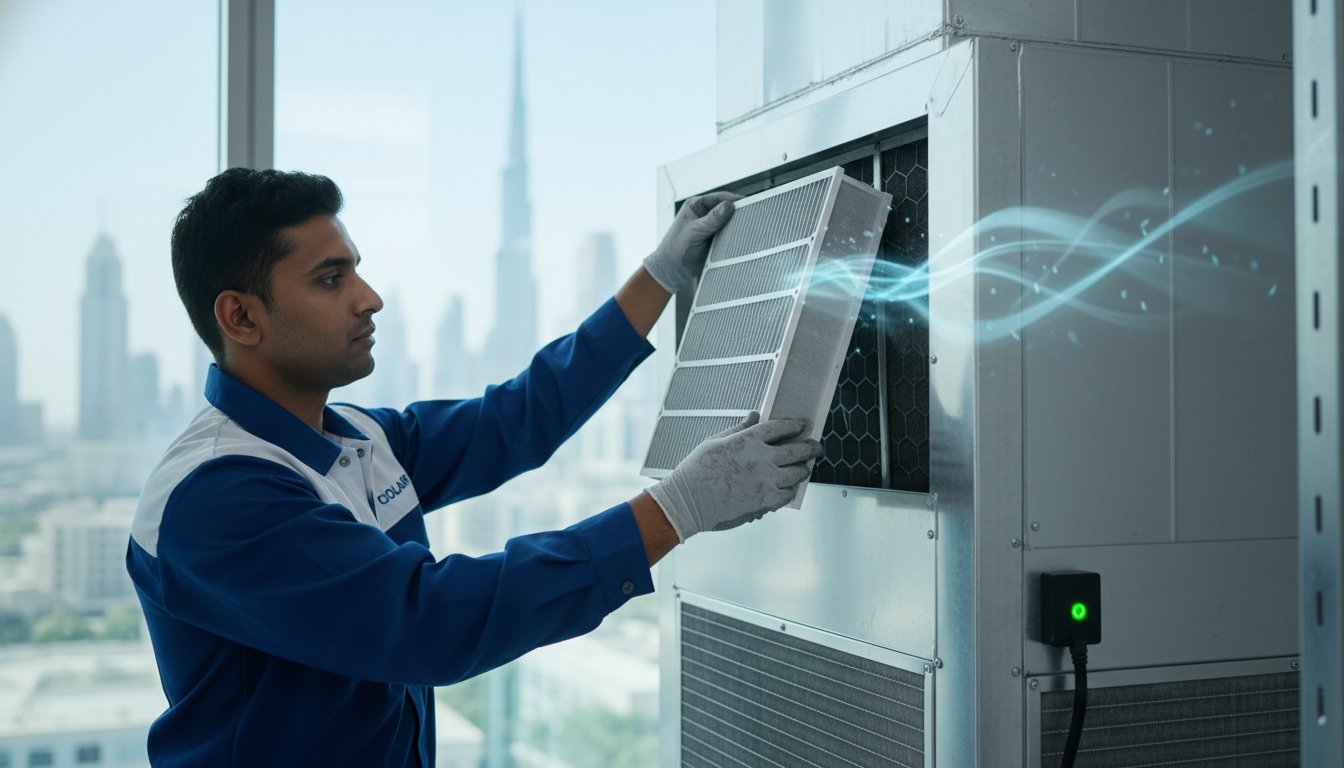
Improving Air Quality in Your Dubai Home: The 2026 Technical Guide
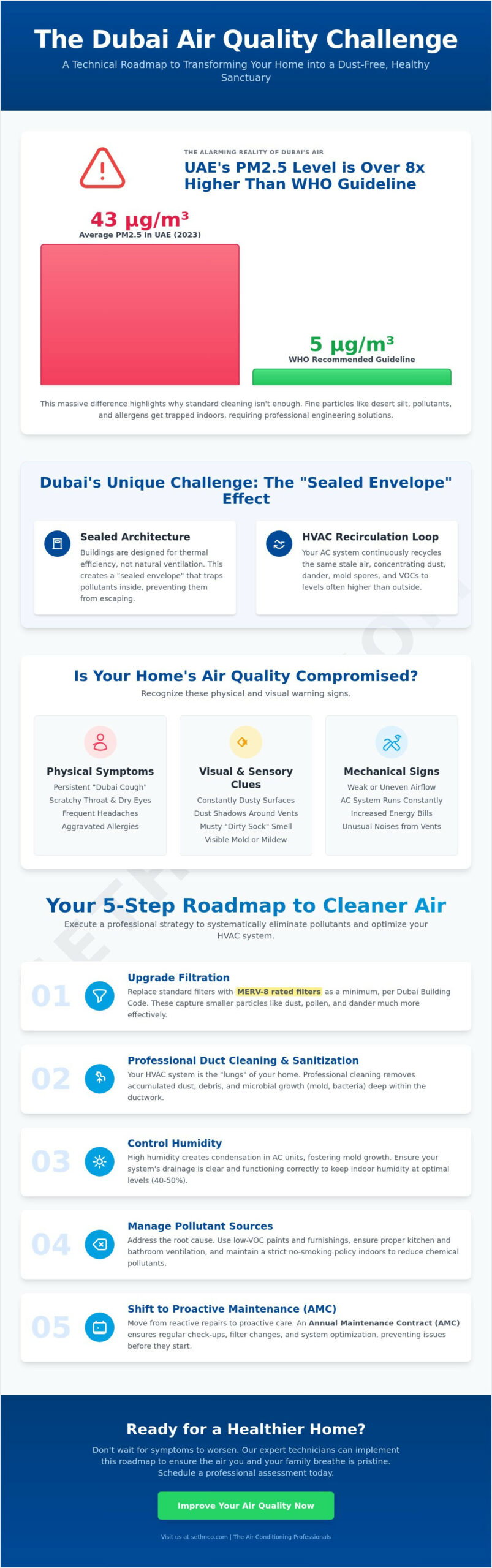
In 2023, the average PM2.5 level in the UAE reached 43 µg/m³, a figure significantly higher than the WHO’s recommended guideline of 5 µg/m³. If you find yourself constantly dusting surfaces or battling the persistent “Dubai cough,” you’re not alone in your frustration. It’s exhausting to clean your living space only to see a fine layer of desert silt return within hours, or to worry about mold spores thriving in your ventilation ducts. You deserve a home environment that supports your health rather than challenging it.
This guide provides the technical roadmap for improving air quality in dubai home environments by moving beyond superficial cleaning to systematic engineering solutions. We’ll show you how to implement professional strategies that eliminate indoor pollutants and optimize your HVAC system’s performance. You’ll learn about the latest 2026 regulatory standards, the necessity of MERV-8 filtration according to the Dubai Building Code, and how a structured maintenance schedule can transform your home into a dust-free sanctuary. From advanced AC duct sanitization to precision humidity control, we’re detailing the exact steps required to ensure the air you breathe is as pristine as the city skyline.
Key Takeaways
- Understand how Dubai’s “sealed envelope” architecture and recirculation loops trap pollutants indoors, requiring specific technical interventions.
- Identify physical and visual warning signs of poor air quality, including the “Dubai cough” and dust shadows around ventilation points.
- Recognize your HVAC system as the lungs of your property and learn why regular AC duct cleaning and sanitization are non-negotiable for health.
- Execute a professional 5-step roadmap for improving air quality in dubai home environments, focusing on high-efficiency filtration and source control.
- Shift from reactive repairs to proactive environmental management through structured Annual Maintenance Contracts (AMC).
The Dubai Indoor Environment: Why Air Quality is a Unique Challenge
Dubai’s architectural landscape is defined by its resistance to extreme heat. While these “sealed envelope” designs are excellent for thermal efficiency, they create a unique set of obstacles for Indoor air quality (IAQ). In most global climates, opening a window provides natural ventilation; in the UAE, the outdoor environment is often too harsh to allow for such exchanges. This results in a “recirculation loop” where the same indoor air is cooled, filtered, and moved through the home repeatedly. Without a technical strategy for improving air quality in dubai home settings, this loop becomes a trap for microscopic debris, pet dander, and biological contaminants.
The challenge is compounded by regional environmental factors. Ambient sand and dust, categorized as PM10 and PM2.5, are ever-present in the desert air. During seasonal sandstorms, these concentrations spike dramatically. Even when windows are shut tight, these fine particles penetrate through microscopic gaps in seals and door frames. Once inside, the lack of fresh air intake means these particles settle into your soft furnishings and AC ducts. High outdoor humidity also plays a role. When humid air meets the cold surfaces of your cooling system, it creates condensation. Without proper maintenance, this moisture becomes a breeding ground for microbial growth within the dark recesses of your vents.
The Sealed Building Syndrome in the UAE
Modern construction in Dubai prioritizes high-performance thermal insulation to combat external temperatures that frequently exceed 45°C. This creates a hermetically sealed environment. While this is vital for energy conservation, it often comes at the cost of natural ventilation. Older residential units frequently lack dedicated fresh air handling units (FAHUs), meaning there’s zero introduction of filtered outside air. Your AC system ends up recycling the same stale air for months at a time, concentrating pollutants to levels that can exceed outdoor concentrations. Identifying these structural limitations is the first step toward improving air quality in dubai home environments.
Dubai-Specific Pollutants: From Desert Sand to VOCs
The dust found in Dubai isn’t just “dirt.” It’s a complex mixture of mineral silica, sea salts, and urban particulates. These fine particles are small enough to bypass the body’s natural defenses. Additionally, the city’s rapid growth means many residents live in newly completed developments. These spaces often contain high levels of Volatile Organic Compounds (VOCs) originating from fresh paint, adhesives, and new interior fit-outs. PM2.5 is the primary fine-particle threat in urban Dubai, consisting of particles less than 2.5 micrometers in diameter that can travel deep into the respiratory system.
Identifying the Warning Signs of Poor Air Quality
Recognizing a decline in your indoor environment often starts with subtle physical changes that are easy to dismiss as external factors. Many residents overlook persistent headaches, dry eyes, or a scratchy throat, attributing them to the general desert climate. However, the “Dubai cough,” a dry and lingering respiratory irritation, is a classic indicator that your home’s filtration system is no longer effectively capturing fine particulates. These health markers are your body’s first response to an environment where pollutants have reached a critical concentration. Monitoring these symptoms is a vital part of improving air quality in dubai home environments before they escalate into chronic conditions.
Beyond physical health, your home itself provides visual and mechanical data. If you notice greyish residue settling on curtains or “dust shadows” appearing around your ceiling vents, your system is likely bypass-filtering or recirculating settled debris. Mechanical signs are equally telling. When airflow feels weak or you experience uneven cooling between rooms, it often suggests that internal blockages are restricting the system’s ability to breathe. Research into effective ventilation strategies highlights that mechanical resistance from debris not only ruins efficiency but actively degrades the purity of the air you breathe.
The “Dirty Sock Syndrome” and AC Smells
If a pungent, musty odor greets you when the AC compressor engages, you’re likely dealing with “dirty sock syndrome.” This isn’t merely a nuisance; it’s a biological red flag. This specific smell is caused by the buildup of bacteria and mold on the evaporator coils, where moisture naturally accumulates. While Volatile Organic Compounds (VOCs) from new furniture or paint have a sharp, chemical scent, biological growth produces an earthy, damp odor. By the time this smell becomes noticeable, microbial colonization is typically well-advanced within the dark, humid sections of your unit.
Physical Clues Around Your AC Vents
Your AC vents act as a diagnostic interface for your entire HVAC network. Black or green spots on the louvers are almost always a sign of mold growth, fueled by the intersection of cold air and high indoor humidity. You can perform a simple “vent test” by wiping the inside of the grill with a damp white cloth. If the cloth reveals an oily or dark grey residue, it confirms that the internal lining of your ducts is saturated with pollutants. Addressing these visual cues through professional duct cleaning dubai services is essential for restoring a healthy baseline. If you’re seeing these signs, a thorough building maintenance inspection can help map out a corrective path for improving air quality in dubai home spaces permanently.
The HVAC Connection: How Your AC Impacts Air Purity
Your HVAC system acts as the primary respiratory organ of your residence. In a climate where windows remain closed for the majority of the year, every cubic meter of air you breathe is processed by this mechanical network. If the internal ducts are coated in desert silt or microbial growth, the system is actively distributing pollutants rather than removing them. While standalone purifiers offer localized relief, they cannot compete with the sheer volume of air managed by a central HVAC unit. Achieving a meaningful impact when improving air quality in dubai home environments requires a deep focus on these mechanical “lungs.”
The synergy between mechanical ventilation and high-efficiency filtration is critical. Standard mesh filters found in many older units are designed primarily to protect the equipment from large debris, not to protect your health from fine particulates. According to the EPA’s Guide to Indoor Air Quality, effective pollutant control relies on a combination of source management and adequate ventilation. For Dubai residents, this means upgrading to MERV-8 or higher filters to capture the microscopic PM2.5 particles that standard filters often miss.
The Critical Role of AC Coil Hygiene
The evaporator coil is where the thermal exchange happens, but it’s also where moisture meets dust. This intersection creates a sticky biofilm that acts as a breeding ground for bacteria and allergens. Dirty coils don’t just degrade air purity; they force your system to work harder, leading to higher DEWA bills and premature mechanical failure. Prioritizing professional ac coil cleaning dubai ensures that the air is chilled across a sterile surface, maintaining both health and energy efficiency. It’s a pragmatic step that pays for itself through reduced operational costs and improved system longevity.
AC Duct Sanitization vs. Basic Cleaning
Many homeowners mistake a quick vacuuming of vent grills for a comprehensive solution. Basic cleaning only addresses the visible entry points, leaving the vast majority of the ductwork untouched. True sanitization involves mechanical brushing to dislodge adhered particles followed by antimicrobial fogging to neutralize lingering spores. This rigorous process is a cornerstone of improving air quality in dubai home settings because it prevents the immediate re-contamination of the air once the system is powered back on. Clean ducts ensure that the purified air actually reaches your living space without picking up new contaminants along the way.
How to Improve Air Quality in Your Dubai Home: A 5-Step Roadmap
Achieving a pristine indoor environment requires a shift from passive cleaning to active environmental management. This roadmap offers a technical approach to improving air quality in dubai home spaces by targeting the root causes of pollution rather than just the symptoms. It’s a process of elimination and optimization. By following these five steps, you can create a measurable difference in your home’s air purity levels.
- Step 1: Source Control – Minimize the introduction of pollutants by choosing low-VOC paints and cleaning agents, especially after a new interior fit-out.
- Step 2: Filtration Upgrade – Move beyond basic dust protection by installing high-efficiency filters that meet or exceed the Dubai Building Code’s MERV-8 recommendation.
- Step 3: Mechanical Cleaning – Eradicate biological growth and accumulated silt through professional sanitization of your AC ducts and evaporator coils.
- Step 4: Humidity Management – Maintain indoor relative humidity between 40% and 60% to prevent the proliferation of mold and dust mites.
- Step 5: Active Purification – Deploy HEPA and activated carbon purifiers to capture residual fine particles and neutralize lingering odors.
Upgrading Your Filtration Strategy
Filtration is your primary defense against the desert’s fine particulate matter. While standard washable mesh filters protect your AC equipment from large debris, they’re ineffective against PM2.5 particles. Upgrading to a MERV 13 pleated filter is often the “sweet spot” for residential health. These filters capture up to 90% of particles between 1.0 and 3.0 microns, including smoke and bacteria. During Dubai’s peak summer months, when your system runs continuously, check these filters every 30 days. Pleated media provides significantly more surface area than flat mesh, allowing for superior capture rates without causing an excessive pressure drop in your HVAC system.
Humidity Control in the UAE Climate
Managing moisture is a critical component of improving air quality in dubai home environments. High humidity levels combined with cooled surfaces lead to condensation, which is the primary catalyst for mold growth within ventilation systems. To prevent this, keep your indoor temperature consistently below 24°C; this allows the AC unit’s coil to effectively pull moisture from the air. In high-moisture zones like kitchens or bathrooms, standalone dehumidifiers can provide the extra support needed to keep levels within the ideal 40-60% range. Aiming for a CO2 level below 800 ppm and keeping PM2.5 under 15 µg/m³ ensures your home meets international health benchmarks. For a comprehensive evaluation of your system’s performance, consider our professional building maintenance services to ensure every component is operating at peak efficiency.
Professional Maintenance: The Long-Term Solution
Sustainable results in environmental management require a fundamental shift from reactive “repair” to proactive “prevention.” While one-off interventions provide temporary relief, the extreme dust and humidity of the UAE demand a consistent mechanical strategy. This is the final and most critical stage in improving air quality in dubai home environments. By maintaining a sterile HVAC system through a structured framework, you protect your family’s respiratory health while simultaneously lowering the total cost of home ownership. A well-maintained system doesn’t just cool; it purifies, dehumidifies, and protects your indoor climate year-round.
The return on investment for high-standard air quality is multi-faceted. Clean evaporator coils and unobstructed ducts allow the system to operate with minimal mechanical resistance, which directly reduces energy consumption and lowers DEWA bills. Beyond financial savings, the health benefits of breathing filtered, pathogen-free air lead to fewer instances of the “Dubai cough” and reduced expenditure on allergy management. Additionally, preventing mold and dust accumulation preserves the integrity of your interior fit-outs, ensuring that greyish residue doesn’t permanently stain your curtains or upholstery. It’s a pragmatic approach to preserving both your health and your property’s value.
The Value of an Annual Maintenance Contract
In Dubai’s demanding climate, AC systems often run for 24 hours a day during the peak summer months. This high usage makes quarterly check-ups a technical necessity rather than a luxury. A comprehensive ac maintenance contract dubai provides a proactive shield for your home. These contracts should encompass more than just a filter change; they must include deep coil sanitization, drain line flushing to prevent leaks, and electrical system inspections. It’s vital to ensure your provider uses non-toxic, food-grade sanitizers that neutralize spores without introducing new chemical pollutants into your breathing zone.
Choosing the Right Electromechanical Partner
Selecting a service provider involves finding a partner that understands the intricate regional infrastructure scene. With over 20 years of experience in the UAE, a firm brings the technical weight and quiet strength needed to navigate complex residential MEP works. You should look for a “Pragmatic Expert” approach; this involves finding a partner that acts as the dependable backbone of your building’s functionality. This means choosing a team that is highly organized, mission-oriented, and willing to exceed standard requirements to ensure perfection in their craft. A veteran provider doesn’t just offer a series of transactional repairs. They offer a visionary contribution to your home’s long-term health. For those serious about improving air quality in dubai home settings, a professional audit is the best starting point. Contact Sethnco today to schedule a comprehensive air quality assessment and experience the reliability of a market leader.
Securing a Healthier Indoor Future for Your Dubai Residence
The path to a cleaner, safer living environment in the UAE is defined by technical precision rather than simple housekeeping. We’ve established that the “sealed envelope” of modern Dubai architecture requires a sophisticated approach to filtration and moisture control to prevent the concentration of indoor pollutants. By following the roadmap provided, you’re not just cleaning a room; you’re engineering a healthier lifestyle. The process of improving air quality in dubai home spaces is an ongoing commitment to mechanical excellence and proactive maintenance.
Seth International Technical Services LLC (Sethnco) brings over 20 years of UAE technical expertise to your doorstep, providing the quiet strength needed to maintain complex residential systems. Our certified HVAC and MEP specialists deliver comprehensive solutions through tailored AMC plans that safeguard your home year-round. Protect your family’s health with a professional AC air quality audit from Sethnco. You can take pride in the perfection of your home’s environment, knowing it’s supported by a partner that values reliability as much as you do.
Frequently Asked Questions
Is indoor air quality really worse than outdoor air in Dubai?
Yes, indoor air quality is frequently lower than outdoor air because pollutants become trapped in a continuous recirculation loop. While outdoor air contains desert dust, the concentrations of Volatile Organic Compounds (VOCs), pet dander, and skin cells inside a sealed building can be significantly higher. Without a technical approach to improving air quality in dubai home environments, these indoor pollutants continue to cycle through the AC system indefinitely.
Can indoor plants actually improve my home air quality?
Indoor plants offer aesthetic value but provide a negligible impact on actual air purification in a typical residential setting. To achieve measurable results in removing PM2.5 or formaldehyde, you would need an impractical number of plants in every room. For genuine environmental control, it’s more effective to rely on high-efficiency MERV filters and mechanical ventilation systems engineered to handle the specific volume of air in your home.
How often should I clean my AC ducts in Dubai?
Professional AC duct cleaning and sanitization are recommended every 12 to 24 months for most residential properties. However, if you live near an active construction site or have multiple pets, you might require an inspection sooner. Regular maintenance prevents the buildup of desert silt and biological growth, ensuring that your HVAC system doesn’t become a primary source of indoor pollution during the high-usage summer months.
Will an air purifier remove all the dust in my home?
An air purifier is an excellent supplementary tool, but it won’t eliminate all the dust in your home. These devices only capture airborne particles that pass through their HEPA filters; they cannot remove dust that has already settled on furniture or within the AC ductwork. Effective dust management requires a combination of source control, mechanical duct cleaning, and active filtration within your central HVAC system.
What is the ideal humidity level for a Dubai apartment?
The ideal relative humidity level for a Dubai apartment is between 40% and 60%. Maintaining this range is crucial because levels above 60% create the perfect environment for mold growth and dust mite proliferation. Conversely, air that is too dry can irritate the respiratory system and skin. Using the dehumidification setting on your AC or a standalone unit helps keep these levels stable throughout the year.
How do I know if there is mold inside my AC system?
Mold usually manifests through a persistent musty odor, often described as “dirty sock syndrome,” or visible black spots on the vent grills. If you notice these signs, it’s likely that moisture is accumulating on your evaporator coils or within the duct lining. A professional inspection using specialized cameras can confirm the extent of the colonization and determine the necessary sanitization steps to restore a healthy environment.
Does a regular AC service include air quality improvement?
A standard AC service typically focuses on mechanical functionality, such as checking refrigerant levels and cleaning basic mesh filters. It does not usually include deep sanitization or duct cleaning. For those serious about improving air quality in dubai home spaces, it’s essential to request specialized services like coil sanitization and duct sanitization. These processes go beyond basic maintenance to actively remove biological contaminants.
Are chemical air fresheners bad for indoor air quality?
Chemical air fresheners are generally detrimental to indoor air quality because they release synthetic Volatile Organic Compounds (VOCs) into your breathing zone. These products mask odors with fragrances rather than eliminating the source of the smell. For a healthier home, it’s better to identify and remove the underlying cause of the odor, such as mold or stale air, through proper ventilation and professional HVAC sanitization.


