
Bad Smell from AC Vent in Dubai: Causes, Health Risks, and 2026 Expert Solutions
A typical villa in Dubai can accumulate up to five kilograms of dust in its ductwork every single year. When this debris combines with the city’s extreme humidity, it creates a breeding ground for the bacteria responsible for that persistent bad smell from ac vent dubai. It’s a common frustration that impacts both your comfort and your respiratory health. You’ve likely noticed the musty scent or perhaps an increase in allergy flare-ups among your family members. These aren’t just minor inconveniences; they’re signals of an HVAC system under significant mechanical stress.
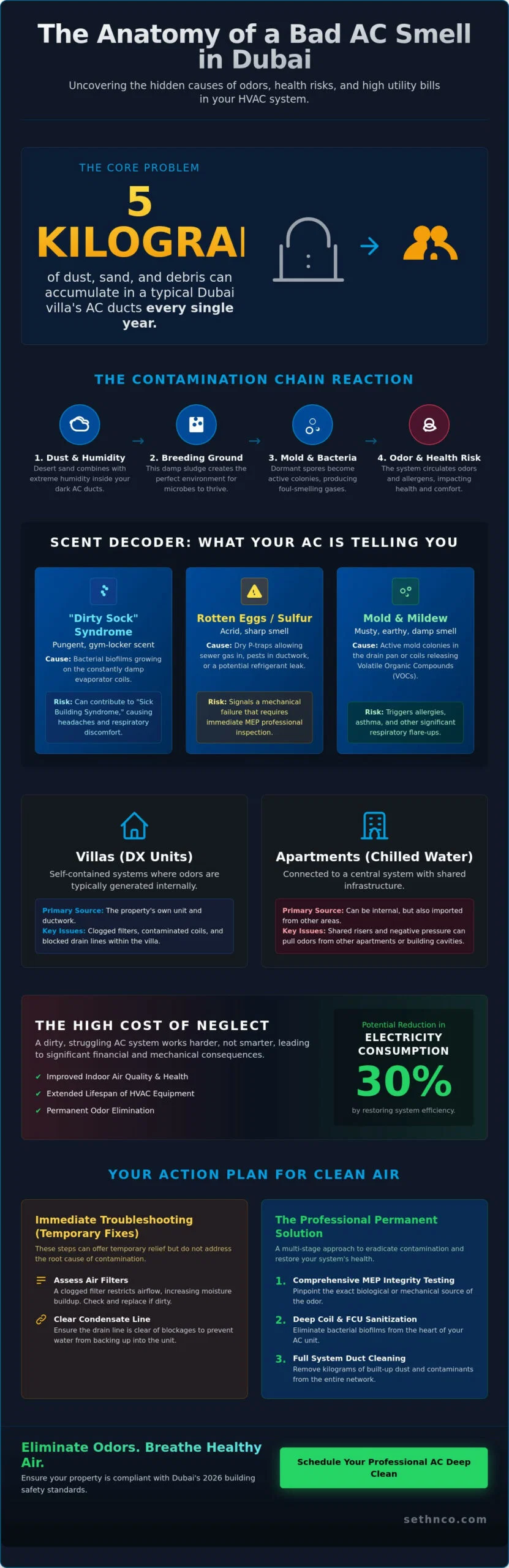
We understand that a healthy home environment is a non-negotiable priority for your family. This guide identifies the exact cause of your AC odour and details the professional steps required to restore fresh air to your Dubai property. We’ll examine the technical realities of Fan Coil Unit (FCU) deep cleaning and how to navigate the mandatory maintenance requirements of Dubai Law No. (3) of 2026. By addressing these issues, you can eliminate odors permanently, improve indoor air quality, and potentially reduce electricity consumption by up to 30%.
Key Takeaways
- Identify the specific scent profile of your unit to determine whether the issue stems from microbial growth or mechanical drainage failures exacerbated by regional humidity.
- Distinguish between the unique infrastructure requirements of apartment Chilled Water systems and villa DX units to address how shared risers can import odors into your space.
- Learn the professional methodology for permanently eliminating a bad smell from ac vent dubai through comprehensive MEP integrity testing and multi-stage sanitization.
- Master immediate troubleshooting steps, including air filter assessment and condensate line clearing, to protect your HVAC system from premature wear and rising utility costs.
- Ensure your property remains compliant with the latest 2026 Dubai building safety standards by transitioning from reactive repairs to a structured annual maintenance model.
Deciphering the Scent: Why Your AC Vents Smell in Dubai
In Dubai, an offensive odor is rarely just a nuisance; it’s a diagnostic signal from your HVAC system. Identifying the specific “smell profile” is the first step in resolving a persistent bad smell from ac vent dubai. This isn’t just about surface dirt. The city’s unique climate, where humidity often fluctuates between 60% and 90%, fundamentally changes how indoor air systems function. High moisture levels accelerate the degradation of organic matter trapped within the unit, leading to complex chemical reactions that standard domestic cleaning often fails to address.
Fine desert sand plays a critical role in this process. These microscopic particles often bypass basic filters and settle deep within internal components like the heat exchanger and blower motor. Once there, they act as a sponge, trapping moisture against metal surfaces and creating a dense, damp sludge. This sludge provides the ideal environment for microbial colonies to thrive. If the scent is localized to one room, you’re likely dealing with a dirty filter or a blocked drain line in a specific unit. If the odor permeates the entire property, the contamination is likely system-wide within the main ductwork or the central Air Handling Unit (AHU).
The “Dirty Sock” Odor: Bacterial Biofilms
When your vents emit a pungent, gym-locker scent, you’re likely experiencing what engineers call “Dirty Sock Syndrome.” This is the result of bacterial biofilms developing on the evaporator coils. As your unit cycles between cooling and standby modes, the constant temperature shifts encourage rapid bacterial growth on the damp fins. Simple air fresheners won’t help here because they don’t neutralize the biological source. Left unaddressed, this degradation of indoor air quality can contribute to Sick Building Syndrome, causing headaches and respiratory discomfort for those inside.
Rotten Eggs and Sulfur: Mechanical vs. Pest Issues
A smell reminiscent of rotten eggs or sulfur usually points to a mechanical failure or a plumbing integration issue rather than mold. In many Dubai high-rises, dry P-traps in the condensate drainage system allow sewer gases to back up into the ventilation system. The extreme summer heat also occasionally drives small pests into the ductwork in search of moisture. If you detect a sharp, chemical scent alongside the sulfur, it could indicate a refrigerant leak. You should shut down the system immediately if you suspect a gas-related issue, as these require precise MEP (Mechanical, Electrical, Plumbing) intervention to ensure building safety.
The Science of Odor: Mold, Bacteria, and Drainage
Mold spores are omnipresent in the Dubai atmosphere. When they enter the dark, damp environment of an HVAC system, they transition from dormant particles into active colonies. This biological lifecycle is fueled by the condensation that naturally occurs during the heat exchange process. If moisture isn’t evacuated efficiently, it creates a nutrient-rich “bio-soup” that produces volatile organic compounds (VOCs). These gases are what you eventually detect as a bad smell from ac vent dubai. It’s a complex chemical process that requires more than just a surface wipe to resolve.
Odors aren’t always generated within the unit itself. Sometimes, “bypass air” is the culprit. This happens when negative pressure within the ductwork pulls air from unsealed wall cavities or ceiling voids. These hidden spaces often contain dust, insulation particles, or old building materials that off-gas over time. Additionally, chemical odors can arise from the off-gassing of internal plastic components or the residue of aggressive, non-approved cleaning agents used during a superficial service. Identifying whether the scent is biological or chemical is vital for a permanent fix.
Evaporator Coils as the Primary Culprit
The evaporator coil is the heart of the cooling process. As air passes through the fins, moisture condenses on the cold surface. If the coils are coated in fine desert dust, they retain this moisture far longer than intended. This creates a persistent dampness that leads to Dirty Sock Syndrome, a common phenomenon in high-humidity regions. According to the EPA guide to mold, controlling moisture is the only way to stop microbial growth. Investing in professional AC coil cleaning in Dubai ensures your system can dehumidify effectively, stripping the biological colonies of their water source.
Condensate Drain Line Blockages
The condensate tray is designed to collect and whisk away water. However, the combination of standing water and dust often leads to the formation of a thick, gelatinous sludge known as “algae bloom.” This sludge eventually blocks the narrow drain lines, causing water to back up into the secondary emergency pan or, worse, overflow into your ceiling. A clear sign of this failure is the appearance of damp spots or brown rings on the gypsum around your vents. If you notice these signs, it’s wise to consider a comprehensive building maintenance review to prevent structural damage. Stagnant water in the tray doesn’t just smell; it becomes a primary breeding ground for Legionella and other harmful pathogens.
Apartment vs. Villa: Dubai-Specific Infrastructure Challenges
The mechanical architecture of your property determines how odors develop and travel. In Dubai, the distinction between a Chilled Water system in a high-rise apartment and a Direct Expansion (DX) system in a villa is fundamental to troubleshooting. Apartment dwellers often contend with odors imported from neighboring units through shared ventilation risers. Conversely, villa owners typically face issues rooted in external environmental intake and large-scale ductwork stagnation. Understanding these infrastructure nuances is the only way to effectively eliminate a bad smell from ac vent dubai.
District cooling systems, common in areas like Downtown or Dubai Marina, introduce another layer of complexity. In these setups, the building management is responsible for the central chiller plant, but the individual tenant or owner is responsible for the Fan Coil Units (FCUs) and internal ductwork. When odors arise, it’s vital to determine if the contamination is within your unit’s coils or if the building’s primary fresh air supply is compromised. We often find that negative air pressure in kitchens and bathrooms, often caused by powerful exhaust fans, forces the AC system to pull “make-up air” from unsealed wall cavities or plumbing voids. This brings unwanted scents into the living space.
Smell Migration in High-Rise Buildings
High-rise buildings utilize vertical shafts for ventilation and drainage. The “Stack Effect,” which is the movement of air through a building’s vertical openings, can pull cooking odors or microbial scents from one floor to another if fire dampers or vent seals are compromised. If your kitchen exhaust is not balanced with the AC’s intake, the resulting negative pressure can draw air from bathroom drains or shared corridors. This cross-contamination significantly impacts the health effects of indoor air quality, as you aren’t just breathing your own air, but a cocktail of shared building pollutants. Ensuring the integrity of fire dampers and seals is a critical part of our comprehensive MEP works audits.
Villa-Specific Issues: External Intake and Sand
Villas present a different set of challenges. Most luxury villas rely on Fresh Air Handling Units (FAHUs) to maintain positive pressure and keep dust out. However, if these rooftop units aren’t serviced, they pull in fine desert sand and external pollutants directly into the primary ductwork. Over time, sand accumulates in “dead spots,” which are areas where the duct design causes air velocity to drop. This stagnant sand traps moisture, creating a localized breeding ground for bacteria that eventually spreads through the entire system. Regular maintenance of these external intake points is the only way to prevent mechanical friction and biological growth from ruining your indoor environment.
Immediate Actions and Long-Term Prevention
Resolving a bad smell from ac vent dubai requires a systematic approach that moves from simple filtration checks to deep mechanical sanitization. The first line of defense is always the air filter. If these components are clogged with the two to five kilograms of dust that a typical Dubai villa accumulates annually, airflow drops and odors intensify. You should inspect filters monthly; however, replacing them is only a surface-level fix if the internal cooling coils remain contaminated. Step two involves clearing the condensate drain line using professional-grade wet-dry vacuuming. This ensures the gelatinous “algae sludge” is removed entirely rather than simply pushed further into the plumbing system where it can cause future blockages.
Deep-seated odors require a more aggressive protocol. We utilize pH-neutral, anti-microbial solutions to sanitize evaporator coils without corroding the delicate aluminum fins. For properties with persistent mold issues, specialized fogging and duct sanitization reach the hidden corners of the ventilation system that manual cleaning cannot access. These steps don’t just eliminate scents; they restore the system’s efficiency. Proper maintenance can reduce your electricity consumption by 20% to 30%, providing a direct financial benefit alongside improved air quality.
DIY vs. Professional Intervention
A simple filter wash is a standard homeowner task that helps maintain daily performance. However, when odors persist, you likely need an MEP expert to disassemble the Fan Coil Unit (FCU) for a deep clean. Don’t use household bleach or harsh detergents in your AC. These chemicals can damage internal components and release toxic fumes into your living space. Securing a structured ac maintenance in Dubai is the most reliable way to prevent odor recurrence and ensure compliance with Dubai Law No. (3) of 2026, which mandates periodic building safety checks.
Advanced Air Purification Solutions
Modern technology offers continuous protection against microbial growth. UV-C germicidal lights are an excellent investment; they kill mold spores on the coils before they can colonize. If your property is prone to cooking or chemical odors, installing activated carbon filters provides an extra layer of molecular-level filtration. Maintaining Indoor Air Quality (IAQ) also depends on your thermostat settings. We recommend keeping humidity levels below 60% to inhibit mold germination. To ensure your system remains a source of health rather than a risk, consider our comprehensive Annual Maintenance Contracts for total peace of mind.
Professional Remediation: The Sethnco Approach
Resolving a bad smell from ac vent dubai requires more than a superficial spray. It demands a rigorous, data-driven methodology that addresses the root mechanical and biological causes. At Sethnco, our remediation process begins with comprehensive diagnostic testing of your entire MEP and HVAC system. We don’t just identify the odor; we measure the integrity of the ductwork, the efficiency of the heat exchange, and the functionality of the drainage system. This allows us to determine if the issue is a localized microbial colony or a system-wide failure in ventilation design.
Our multi-stage sanitization process utilizes eco-friendly, Dubai-approved disinfectants that are safe for your family and the environment. We integrate specialized duct cleaning services with system-wide maintenance to ensure every component, from the blower motor to the furthest vent, is free from contaminants. This all-encompassing model is essential for high-rise and commercial HVAC systems across the UAE, where shared infrastructure and complex chilled water loops require a higher level of technical oversight than standard residential units.
Why Sethnco is the Trusted Choice in Dubai
With over two decades of experience in the demanding Middle Eastern climate, we’ve navigated every technical challenge Dubai’s environment presents. We understand that reliability is paramount. Our commitment to energy-efficient solutions helps our clients lower their DEWA costs by 20% to 30% through optimized mechanical performance. By choosing our Annual Maintenance Contracts (AMC), you transition from reactive repairs to a proactive care model. This provides year-round peace of mind and ensures your property stays compliant with the mandatory maintenance requirements of Dubai Law No. (3) of 2026.
Get Started with an IAQ Assessment
A professional inspection is the first step toward a healthier home. During our assessment, we evaluate your Indoor Air Quality (IAQ) against Dubai Municipality standards, checking for suspended particulates and Total Volatile Organic Compounds (TVOCs) which should remain below 300 µg/m³. Our certified technicians provide precision ac repair in Dubai, ensuring that every adjustment adheres to strict safety protocols. Don’t let poor air quality compromise your comfort or health. Schedule your professional HVAC inspection with Sethnco today to restore the perfection of your indoor environment.
Restore Your Home’s Environmental Integrity
Achieving lasting air quality in the UAE requires a commitment to technical precision. We have explored how architectural nuances and microbial lifecycles converge to create a persistent bad smell from ac vent dubai. By moving beyond superficial treatments and addressing the systemic root causes, you protect both your family’s respiratory health and your building’s mechanical longevity. This transition from reactive repair to proactive maintenance is the hallmark of a well-managed Dubai property.
Sethnco provides the specialized expertise necessary to maintain these high standards. With over 25 years of experience in the region, our certified MEP and IAQ specialists deliver comprehensive results through eco-friendly sanitization methods. We take pride in the perfection of our craft, ensuring your HVAC system acts as a dependable backbone for your home. Breathe Fresh Air Again. Book Your Professional AC Sanitization with Sethnco. Your journey to a cleaner, more efficient indoor environment starts today.
Frequently Asked Questions
Is it safe to breathe air from an AC that smells like mold?
Breathing air from a contaminated system is not safe for long-term health. Mold spores and bacteria released into the airflow can trigger respiratory distress, allergy flare-ups, and headaches. Dubai Municipality standards require indoor environments to maintain Total Volatile Organic Compounds (TVOCs) below 300 µg/m³; a musty odor suggests these limits have been exceeded. You should address the biological source immediately to protect your family’s health.
How often should I clean my AC ducts in Dubai to prevent smells?
Professional AC maintenance is recommended every three to four months to account for the extreme regional dust and humidity. A pre-summer service in April or May is particularly critical to prevent a bad smell from ac vent dubai during the months of peak usage. Regular intervention ensures that the two to five kilograms of dust typically found in villa ductwork don’t become a breeding ground for bacteria.
Why does my AC smell like vinegar when I first turn it on?
A vinegar-like scent usually indicates a specific type of bacterial growth on the evaporator coils or the presence of ozone-producing air purifiers. In some cases, it’s caused by the breakdown of organic matter trapped in the filter or a pH imbalance in the condensate tray. Our technicians use pH-neutral sanitization agents to neutralize these acidic scents and restore a neutral air profile.
Can a dirty AC filter cause a bad smell in the whole house?
A single contaminated filter in a central Air Handling Unit (AHU) can distribute odors throughout an entire property. Because the HVAC system recirculates air from every room back through the primary unit, any mold or debris on the filter becomes a centralized source of contamination. Replacing filters is a necessary first step, but it won’t resolve odors if the internal coils or ductwork are already colonized.
What is the “Dirty Sock Syndrome” and can it be fixed?
Dirty Sock Syndrome refers to the pungent, locker-room odor caused by bacterial biofilms on the cooling coils. It’s a common cause of a bad smell from ac vent dubai in high-humidity environments where moisture lingers on the metal fins. This issue is entirely fixable through a professional multi-stage deep cleaning of the Fan Coil Unit (FCU) using specialized anti-microbial treatments.
How much does it cost to professionally remove AC odors in Dubai?
The cost for odor remediation depends on the size of your property and the complexity of your HVAC infrastructure. Prices typically vary based on whether you require a basic filter service, a full duct sanitization, or a deep FCU cleaning. We recommend requesting a detailed inspection to receive an accurate assessment tailored to your specific building type and system condition.
Will a bad smell from the AC affect my DEWA bill?
Odors are often a symptom of dust-choked coils and clogged filters that force your system to work significantly harder. This mechanical strain leads to higher energy consumption and increased utility costs. Proper maintenance that eliminates odors can simultaneously reduce your electricity consumption by 20% to 30%, making professional cleaning a financially sound investment.
Can I use ozone generators to remove AC smells safely?
Ozone generators are generally not recommended for occupied residential spaces because ozone is a known respiratory irritant. While it can neutralize odors, it doesn’t remove the physical dust or mold colonies that cause the problem. A far safer and more effective alternative is professional sanitization using Dubai-approved disinfectants and mechanical cleaning of the system’s internal components.


