
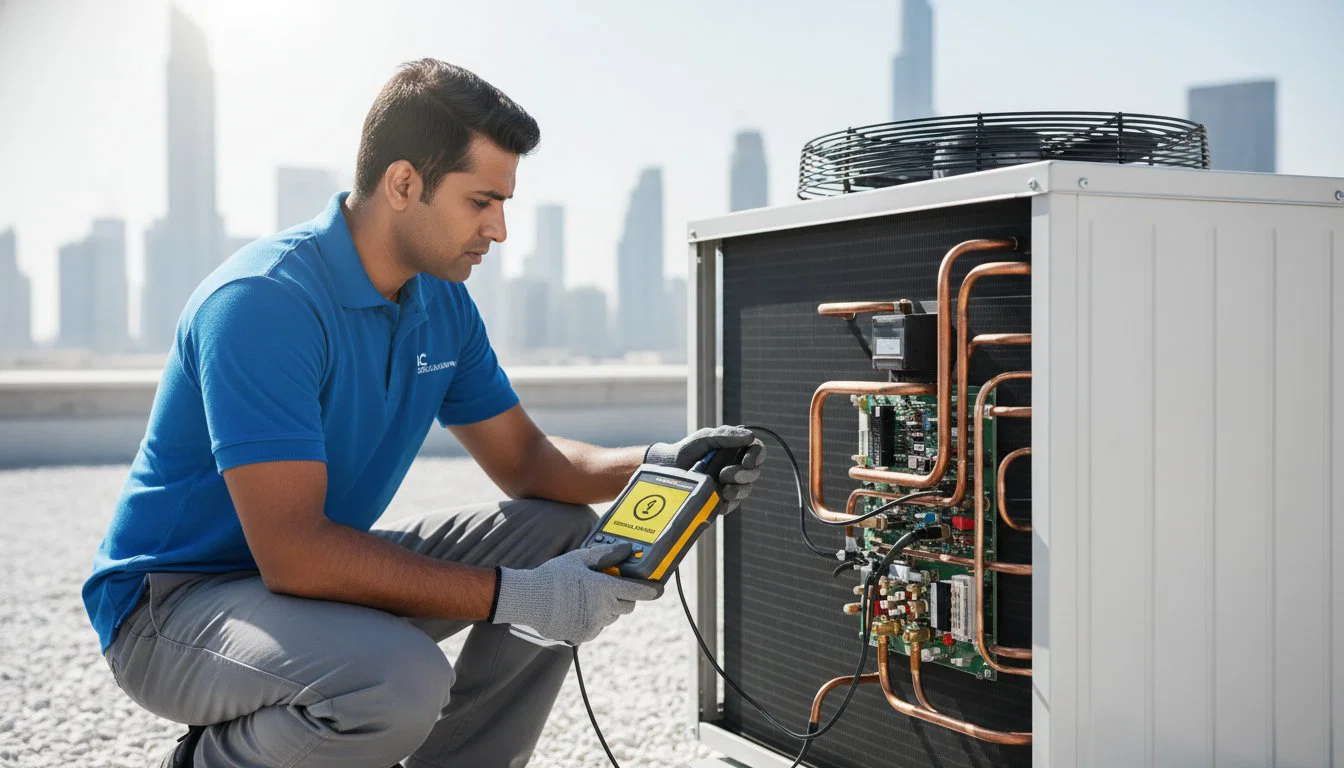
7 Critical Signs Your AC Compressor is Failing in Dubai (2026)
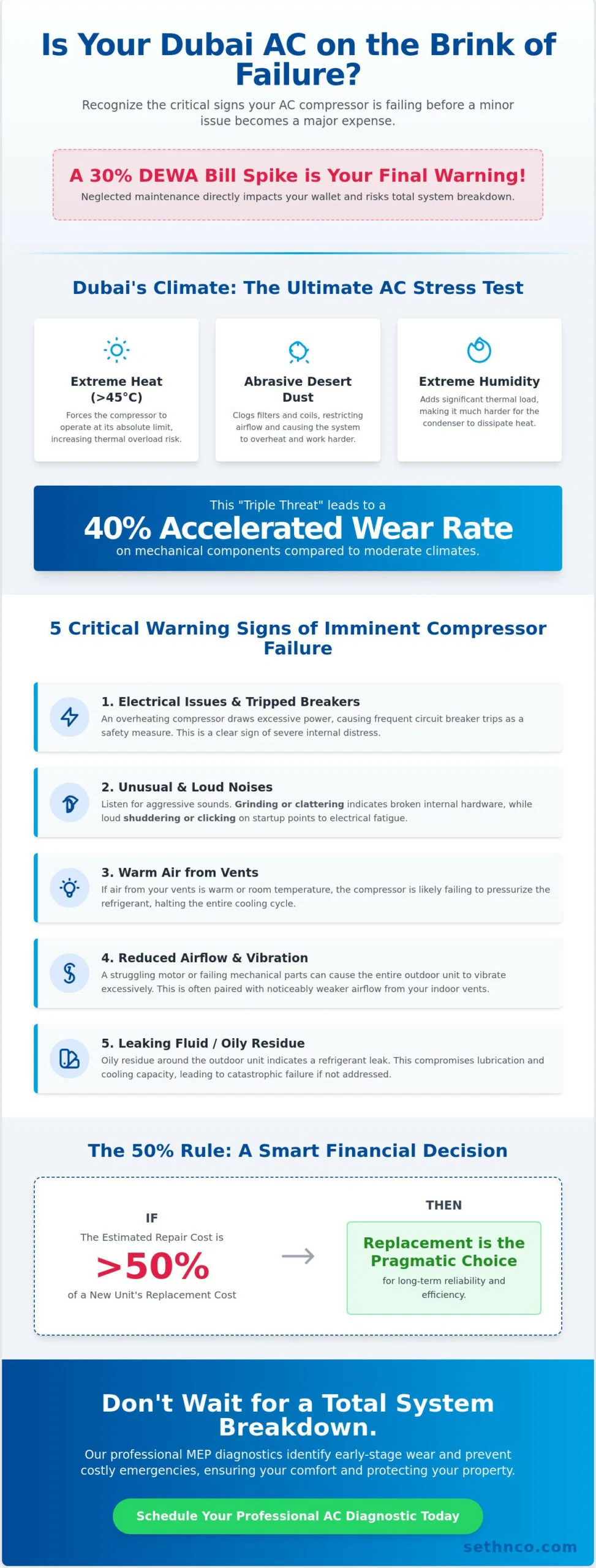
A 30% spike in your DEWA bill isn’t just a seasonal fluctuation; it’s often the final warning before your cooling system suffers a terminal failure. In the extreme 2026 climate, Dubai’s heat causes a 40% accelerated wear rate on mechanical systems, making it vital to recognize the specific signs your ac compressor is failing in dubai before you’re left without cooling. We know how stressful it is to face rising electricity costs while worrying if a technician’s quote is actually justified.
You need to know if your compressor is truly the culprit or if a minor adjustment could restore your comfort. This article provides a professional breakdown of seven critical red flags that signal imminent hardware failure. We’ll help you evaluate whether a repair is viable or if a replacement is the more pragmatic choice for long term reliability. By understanding these technical indicators and the requirements of Dubai Law No. 3 of 2026, you can secure your home’s functionality and avoid the high costs of emergency downtime.
Key Takeaways
- Learn to distinguish between minor refrigerant issues and the specific signs your ac compressor is failing in dubai, such as unusual grinding noises or warm air discharge.
- Understand how the “Triple Threat” of desert dust, extreme humidity, and high ambient temperatures leads to thermal overload and accelerated mechanical fatigue.
- Master the “50% Rule” to determine if a compressor repair is a sound financial investment or if a full unit replacement is the more pragmatic path for your property.
- Discover how professional MEP diagnostics and structured maintenance contracts can identify early-stage wear before it results in a total system breakdown.
The High Stakes of AC Compressor Health in the UAE Heat
The compressor serves as the heart and engine of your cooling system; without it, the entire cycle of refrigeration ceases to exist. In Dubai, where outdoor temperatures frequently exceed 45°C, a failing compressor isn’t a minor maintenance task you can delay. It’s an emergency. Because the city’s climate causes a 40% accelerated wear rate on mechanical components, identifying the early signs your ac compressor is failing in dubai is essential for maintaining building safety under Law No. 3 of 2026. This legislation recognizes that HVAC systems are long-term assets requiring continuous oversight rather than reactive repairs.
When this component struggles, it doesn’t just affect your comfort; it places immense strain on your building’s entire MEP infrastructure. A compromised compressor forces other electrical elements to work beyond their design specifications. This creates a ripple effect of wear that can lead to total system breakdown. Professional oversight ensures that these mechanical stressors are addressed before they compromise the structural integrity of your cooling system.
How the Compression Cycle Works in Buildings
To understand the stakes, you must understand how air conditioning systems work within a high-demand environment. The compressor’s role is to take low-pressure refrigerant gas and transform it into a high-pressure, high-temperature liquid. This liquid then moves to the condenser coil to dissipate heat. When ambient temperatures soar, this heat exchange becomes significantly more difficult. The system must maintain higher internal pressures to move heat outdoors, meaning the compressor works at its absolute limit for months at a time.
The Financial Impact of a Failing Unit
Efficiency drops the moment mechanical wear begins. A struggling unit often experiences a significant increase in amperage draw, pulling more power from the grid just to maintain basic cooling levels. This inefficiency manifests directly in your monthly DEWA statement, where neglected maintenance can result in a 30% cost increase. Beyond the bill, the strain leads to “short-cycling,” where the unit turns on and off rapidly. This behavior causes premature failure in electrical contactors and capacitors, adding layers of repair costs. The compressor stands as the primary energy consumer in any Dubai household. Recognizing the signs your ac compressor is failing in dubai early allows you to protect your budget and the integrity of your property’s infrastructure.
5 Warning Signs Your AC Compressor is Struggling
Identifying signs your ac compressor is failing in dubai starts with monitoring your indoor comfort levels. If your vents blow warm air while the thermostat is set to a low temperature, the compressor likely isn’t circulating refrigerant effectively. This failure often results from damaged internal valves or a motor that has lost its compression capacity. You may also notice reduced airflow or excessive vibration when the unit starts up, which indicates that the mechanical components are struggling to reach operational speed.
Sounds are your system’s primary diagnostic tool. A healthy unit maintains a consistent, low-level hum, but a failing one often emits aggressive auditory cues. Grinding or clattering usually points to broken internal hardware or a motor mount that has finally given way under the stress of a Dubai summer. These noises are rarely minor; they are the sound of a system pushing itself to the point of collapse.
Auditory Red Flags: Grinding vs. Hissing
A “hard start” occurs when the compressor takes several seconds to kick in, often accompanied by a loud clicking or shuddering sound. This signals electrical fatigue or a failing start capacitor. Mechanical internal failure typically sounds like metal on metal, while loose mounting causes a rhythmic vibration. If you encounter these sounds, booking expert AC repair near me in Dubai is the most pragmatic step to prevent a total system seizure.
Electrical and Performance Inconsistencies
Compressors that overheat draw excessive amperage, causing your circuit breaker to trip as a safety precaution. If you find yourself resetting the power frequently, it’s a clear sign of internal distress. You might also experience the “dead zone,” where the indoor fan runs but the outdoor unit fails to activate. These symptoms are often linked to common maintenance issues like burnt wiring or failed contactors. Check the outdoor unit for oily residue around the base; this often indicates a refrigerant leak that has compromised the unit’s lubrication. For reliable oversight, our Building Maintenance Services provide the technical expertise needed to manage these complex MEP systems and keep your infrastructure running efficiently.
Why Dubai’s Climate is the Ultimate Test for HVAC Compressors
Dubai’s environment is a relentless gauntlet for mechanical systems. While many property owners look for obvious signs your ac compressor is failing in dubai, they often overlook the environmental catalysts that trigger these failures. The local climate presents a “Triple Threat” of high ambient heat, extreme humidity, and pervasive desert dust that works in tandem to degrade machinery. Unlike temperate regions where systems cycle off, Dubai’s peak summer months demand 24/7 operation. This constant load means that seasonal maintenance is often insufficient; systems require a proactive, year-round strategy to survive the 40% accelerated wear rate common in the UAE.
Research from the American Council for an Energy-Efficient Economy highlights the impact of high ambient temperatures on cooling infrastructure, noting that as external heat rises, the thermodynamic efficiency of the vapor-compression cycle drops precipitously. When outdoor temperatures exceed 45°C, the compressor must work significantly harder to reject heat. This increased workload generates internal thermal stress that can lead to a total mechanical seizure if the system’s surroundings aren’t perfectly maintained.
The Dust and Coil Connection
Dust is a silent killer for compressors. A typical Dubai villa can accumulate 2-5 kilograms of dust in its ductwork and external units annually. When this debris coats the condenser coils, it acts as an insulator, preventing heat from escaping the refrigerant. This forces the compressor to run at dangerously high internal pressures to achieve the same cooling effect. Investing in regular AC coil cleaning in Dubai is a pragmatic necessity rather than a luxury. For properties in JBR, Dubai Marina, or Palm Jumeirah, salt-air corrosion adds another layer of risk, as salt crystals eat away at the aluminum fins, further reducing heat dissipation and accelerating the signs your ac compressor is failing in dubai.
Refrigerant Stress and Lubrication
The oil inside your compressor is its lifeblood, providing essential lubrication for moving parts. However, extreme heat degrades this oil over time, reducing its viscosity and leading to metal-on-metal friction. If moisture enters the system through a small leak, it reacts with the refrigerant and oil to create a highly corrosive acid. This “acidic” environment eats through the motor windings, causing an internal electrical short. Maintaining a precise gas charge is vital because the cool refrigerant gas returning from the indoor unit is actually what cools the compressor motor itself. Without this thermal regulation, the motor will inevitably succumb to thermal overload.
The Repair vs. Replace Framework: Making the Right Investment
Deciding whether to salvage a failing unit or invest in a new one requires a pragmatic analysis of long-term value. Once you have identified the signs your ac compressor is failing in dubai, the next step is determining the economic viability of a repair. We utilize the “50% Rule” as a primary benchmark; if the cost of replacing the compressor exceeds half the value of a new, high-efficiency unit, a full system replacement is usually the more responsible choice. In Dubai’s demanding environment, a ten year old system is often reaching the end of its functional lifespan due to the 40% accelerated wear rate caused by ambient heat and humidity.
Modern systems offer significant advantages in energy management that older units simply cannot match. Transitioning from obsolete R-22 refrigerant models to contemporary R-410A or R-32 systems reduces your environmental footprint while ensuring compliance with local building safety standards. If your current unit is frequently struggling, upgrading to an Inverter-based AC system can reduce your electricity consumption by 20-30%, directly lowering your monthly DEWA bills. This shift moves your property from a cycle of reactive repairs toward a model of sustainable performance.
When to Simply Replace the Compressor
Replacing only the compressor is a viable strategy if your AC unit is under five years old and remains under a manufacturer warranty. This approach preserves your initial investment while restoring the system’s “engine” to peak condition. However, technical precision is mandatory during this process. Our engineers ensure a comprehensive “system flush” is performed to remove any acidic residue or metallic debris left behind by the previous failure. Installing a new compressor within a contaminated or aging system is a high-risk gamble that often results in a secondary failure within 12 months.
When a Full System Upgrade is Smarter
For systems approaching the ten year mark, a full upgrade is often the most cost-effective path. Older hardware typically lacks the smart modulation features found in modern MEP infrastructure, leading to higher amperage draw and inconsistent cooling. A full replacement also allows for the integration of modern HVAC Design and Installation standards, ensuring your new unit is perfectly sized for your current indoor layout. By choosing a comprehensive upgrade, you secure a fresh warranty and the peace of mind that your cooling system meets the stringent requirements of Dubai Law No. 3 of 2026.
Restoring Comfort: Professional HVAC Diagnostics and Maintenance
Professional troubleshooting is the only reliable way to protect your cooling infrastructure from the hidden costs of “parts-guessing.” When property owners attempt to diagnose complex mechanical issues without specialized tools, they often replace functioning components while the root cause remains unaddressed. Sethnco brings a 20 year legacy to Dubai’s MEP and HVAC sector, providing the technical weight and quiet confidence required to manage the city’s most demanding cooling environments. Our approach transitions your system from a state of emergency to a state of seamless execution, ensuring that every repair is backed by decades of regional expertise.
A compressor diagnostic visit is a comprehensive evaluation of your building’s thermal health. Our engineers don’t just look for the obvious signs your ac compressor is failing in dubai; we analyze the entire cooling loop to identify the stressors that led to the decline. This level of detail is essential for compliance with Dubai Law No. 3 of 2026, which mandates periodic maintenance and safety certifications for all buildings. By identifying a struggling motor before it suffers a terminal short, we help you avoid the high amperage draw that inflates DEWA bills and compromises your electrical system’s safety.
The Sethnco Diagnostic Process
Precision is the cornerstone of our diagnostic methodology. We utilize advanced manifold gauges to measure superheat and subcooling levels, which allows us to verify the internal health of the refrigeration cycle with absolute accuracy. Our technicians perform insulation resistance tests on the electrical windings to check for “grounding” or internal shorts that indicate imminent failure. This technical rigor extends to the entire MEP infrastructure, including the condenser fan motor and contactor points, ensuring that the new or repaired compressor operates within a healthy environment.
Preventing Future Failures
The most pragmatic way to extend the lifespan of your HVAC assets is through a structured AC maintenance contract in Dubai. These agreements provide a mission-oriented framework for early detection, moving away from reactive repairs toward a proactive lifecycle management model. Regular intervention includes scheduled coil cleaning, electrical terminal tightening, and belt inspections to ensure every component functions at peak efficiency. This consistent oversight can extend a unit’s lifespan by up to 5 years while reducing energy consumption by 20-30%. If you suspect your system is losing its cooling capacity, schedule a professional AC diagnostic with Sethnco today to secure your home’s comfort and functionality.
Protecting Your Infrastructure from Dubai’s Environmental Demands
Identifying the specific signs your ac compressor is failing in dubai is the first step toward safeguarding your property from the financial and physical strain of a terminal system breakdown. We’ve explored how extreme ambient temperatures and pervasive desert dust accelerate mechanical fatigue, making proactive oversight a pragmatic necessity. By applying the “50% Rule” and monitoring for auditory or electrical red flags, you can make informed investment decisions that align with the latest building safety regulations and your long-term budget.
Professional diagnostics ensure that your MEP infrastructure remains resilient against the UAE’s unique environmental stressors. With over 20 years of technical expertise in the UAE, our specialized MEP and HVAC engineering teams provide energy-efficient solutions for residential and commercial projects alike. Don’t wait for a terminal failure to compromise your indoor comfort. Contact Sethnco for Expert AC Diagnostics and Maintenance in Dubai to ensure your cooling system operates with the reliability your property deserves. We’re ready to serve as the dependable backbone of your building’s functionality.
Frequently Asked Questions
How long does an AC compressor typically last in Dubai?
An AC compressor in Dubai typically lasts between 8 to 12 years, which is shorter than the global average due to the region’s extreme environmental demands. The 40% accelerated wear rate caused by high ambient temperatures and humidity means that systems reach their mechanical limits faster. Consistent maintenance every 3 to 4 months is the only way to maximize this lifespan and ensure the unit remains compliant with local building safety standards.
Can I run my AC if the compressor is making a loud noise?
You should turn off your AC immediately if you hear grinding, clattering, or aggressive humming sounds coming from the outdoor unit. These noises indicate that internal mechanical parts are failing or that the motor is struggling to turn. Continuing to operate the system in this state can lead to a total mechanical seizure or cause an electrical short that might damage your building’s wider power infrastructure.
How much does it cost to replace an AC compressor in Dubai?
The investment required for a compressor replacement depends on several factors, including the unit’s cooling capacity, the brand of the hardware, and whether it uses modern or obsolete refrigerant. Costs generally include the new compressor, professional labor, and a mandatory system flush to remove acidic contaminants. For an accurate assessment, a professional MEP diagnostic is necessary to evaluate your specific system requirements and ensure long term reliability.
Will a faulty compressor increase my DEWA bill?
Yes, an inefficient compressor is one of the most common reasons for a sudden spike in electricity costs. When the unit’s internal valves or motor begin to fail, it must draw significantly more amperage to achieve the same cooling effect. Data indicates that neglecting HVAC maintenance can lead to a 30% increase in your DEWA bill as the system works harder to overcome mechanical friction and thermal stress.
What is the most common cause of compressor failure in the UAE?
Thermal overload triggered by neglected maintenance is the leading cause of failure in the UAE. When dust and salt crystals accumulate on the condenser coils, they prevent the system from dissipating heat effectively. This forces the compressor to run at dangerously high pressures for extended periods, eventually causing the motor windings to burn out or the internal lubrication to degrade.
Can a dirty AC filter cause the compressor to fail?
A dirty filter is a primary catalyst for compressor failure because it restricts the airflow needed for heat exchange. This restriction can cause liquid refrigerant to flow back into the compressor, a condition known as “slugging.” Since compressors are designed to handle gas only, the presence of liquid can cause immediate and catastrophic damage to the internal pistons and valves.
Is it worth replacing a compressor on a 10-year-old AC unit?
Replacing a compressor on a decade-old unit is rarely the most pragmatic financial decision. In the Dubai climate, a 10-year-old system has already endured significant mechanical fatigue, and other expensive components are likely to fail soon after. Investing in a new, high-efficiency unit usually provides better value through lower energy consumption and the protection of a fresh manufacturer warranty.
How can I tell if my AC just needs a gas refill or a new compressor?
Identifying whether you need a simple refrigerant top-up or a full hardware replacement requires measuring the system’s operating pressures with professional gauges. While both issues result in warm air, a gas leak won’t typically cause the aggressive vibration or tripped breakers associated with mechanical failure. If you observe these specific signs your ac compressor is failing in dubai, a technical diagnostic is essential to confirm the root cause before you invest in repairs.


